
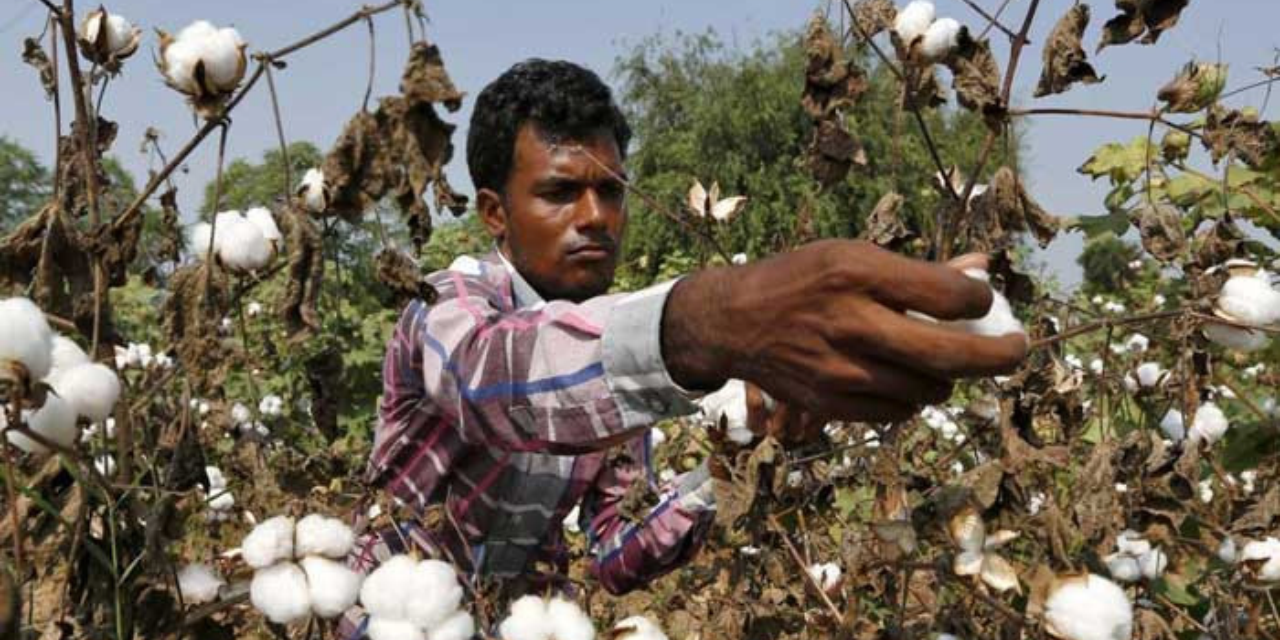
Bangladesh plans to increase domestic cotton production from 224,000 bales to 1.9 million bales by 2050. The initiative aims to reduce dependence on imported cotton and strengthen the country’s textile and readymade garment (RMG) industries.
The Cotton Development Board (CDB) has introduced short-, medium- and long-term plans to increase cotton production by approximately 8.5 times. Under the roadmap, Bangladesh aims to produce 500,000 bales within four years, 1 million bales by 2040 and 1.9 million bales by 2050.
To achieve these targets, the country plans to expand cotton cultivation from 39 to 53 districts. The cultivation area is expected to reach 200,000 hectares, including suitable coastal, hilly, drought-prone and comparatively less fertile areas. Cotton may also be grown alongside vegetables, pulses and spices in selected locations.
Reducing cotton import dependence is a key priority. Domestic production currently meets only around 3–4% of Bangladesh’s annual cotton requirement, estimated at nearly 8 million bales. As one of the world’s leading apparel exporters, Bangladesh relies heavily on imported raw materials to support its textile supply chain.
The economic impact of this dependence is significant. Bangladesh spent approximately Tk 80,000 crore ($6.51 billion) importing 7.3 million bales of raw cotton and yarn during the 2025–26 fiscal year, according to official statistics.
Higher domestic production could create new opportunities for farmers. Cotton Development Board specialist Dr. Md. Gazi Golam Mortuza said cotton can be a profitable cash crop, potentially improving farm incomes while supporting soil management and crop diversification.
However, implementation challenges remain. The CDB currently employs 483 people against 864 approved positions. Officials have highlighted the need to recruit specialised staff to support cultivation expansion, improve productivity and implement the production roadmap effectively.
If successfully implemented, the initiative could strengthen Bangladesh’s domestic cotton supply, reduce import costs and improve raw material security for its textile and garment industries by 2050.


No comments yet. Be the first to share your thoughts!