
Understanding
the Importance of Heat Exchanger Selection
Heat
exchangers play an important role in industrial processes where heating,
cooling and heat recovery are required. Selecting the right type of heat
exchanger helps industries achieve the required heat-transfer performance while
maintaining reliable and efficient operation.
Start
with Your Process Requirements
The first
step is to understand the process conditions. Factors such as fluid type,
flow rate, inlet and outlet temperature, operating pressure and required
heat-transfer duty should be considered before selecting equipment.
Choose
the Right Heat Exchanger Technology
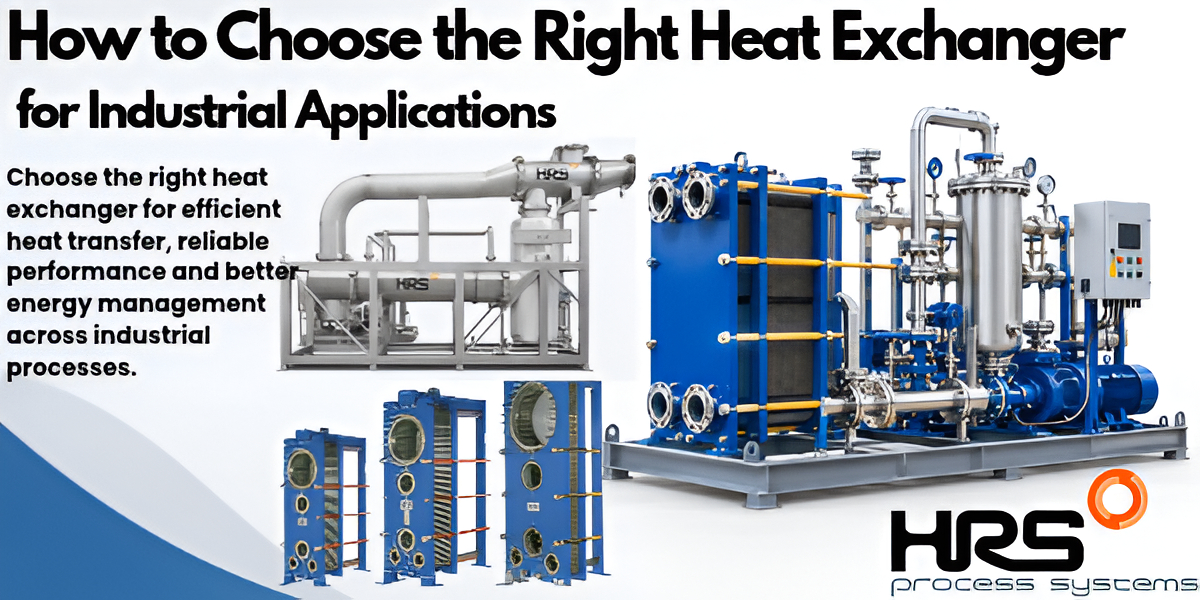
Different
processes require different heat exchanger designs. Depending on the
application, industries can use corrugated tube, smooth tube, plate or
scraped surface heat exchangers. The selection depends on the properties of
the fluids and the specific process requirement.
Material
Selection Matters
The material
used in a heat exchanger should be compatible with the process fluid and
operating conditions. Stainless steel and other specialized materials can be
selected according to factors such as corrosion resistance, temperature and
pressure requirements.
Consider
Energy Efficiency
Heat
exchanger selection also plays an important role in energy management.
Efficient heat transfer and heat recovery can help optimize industrial
processes and reduce unnecessary energy losses.
Consider
Maintenance and Cleaning
For
continuous industrial operation, maintenance is another important consideration.
The equipment should allow suitable access for inspection, cleaning and
servicing, particularly when the process involves fluids that may cause
fouling.
Applications
Across Industries
Heat
exchangers are used in a wide range of industries, including chemical,
pharmaceutical, food and beverage, dairy, fertilizer, steel, power, oil &
gas, petrochemical and textile industries.
HRS
Heat Transfer Solutions
HRS Process
Systems provides different heat-transfer technologies and customized heat
exchanger solutions for industrial applications. Its product range includes ECOFLUX
Corrugated Tube Heat Exchangers, ECOFLUX Smooth Tube Heat Exchangers, HRS FUNKE
Plate Heat Exchangers, UNICUS Scraped Surface Heat Exchangers and Heat
Exchanger Based Systems. HRS Heat Exchanger Manufacturer
Conclusion
Choosing a
heat exchanger should be based on the complete process requirement rather than
a single specification. Proper consideration of technology, materials,
operating conditions, energy efficiency and maintenance requirements can
help industries select a suitable heat-transfer solution for their application.


No comments yet. Be the first to share your thoughts!