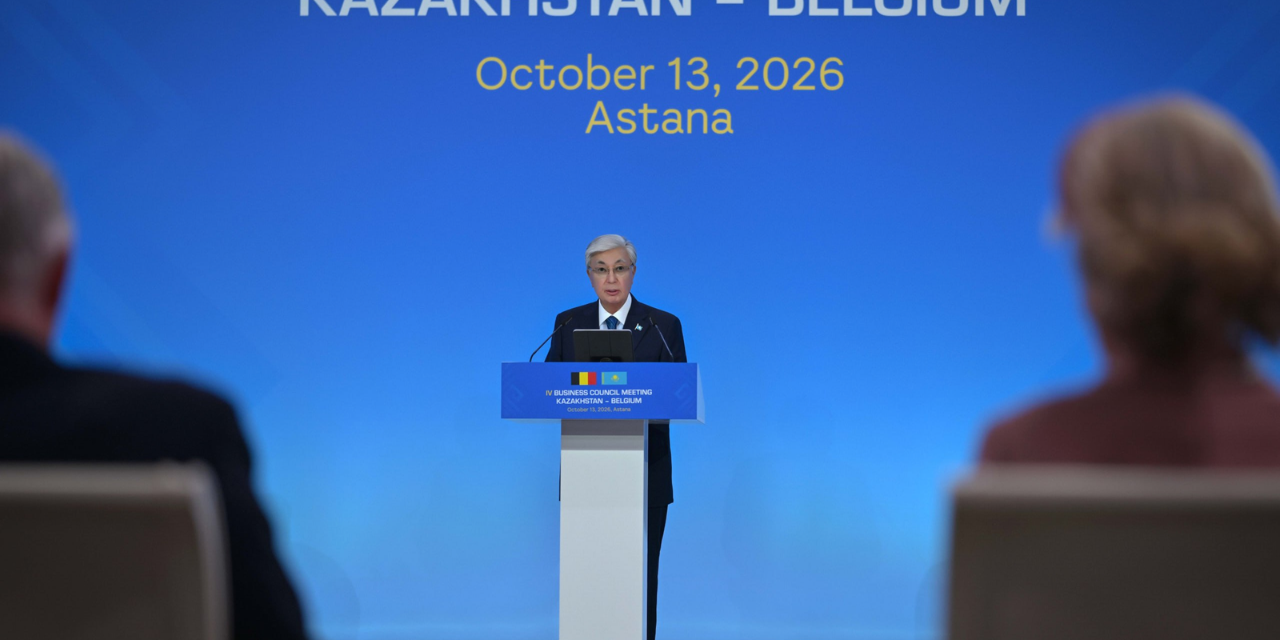
Kazakhstan and Belgium are seeking to expand trade and investment ties across transport, logistics, critical minerals, energy, advanced technology and manufacturing. The priorities were discussed at the fourth Kazakh-Belgian Business Council meeting in Astana on October 13, 2026, during Belgian King Philippe’s state visit.
Kazakhstan President Kassym-Jomart Tokayev said Belgian companies have invested more than $15 billion in Kazakhstan over the past two decades. More than 100 Belgian and joint ventures operate in the country across sectors such as agriculture, healthcare, pharmaceuticals, energy and technology.
Transport and Logistics Take Centre Stage
Both countries see opportunities to improve trade links between Europe and Central Asia. Kazakhstan is modernising its railway and road networks, ports and terminals along the Middle Corridor.
Tokayev proposed closer cooperation between the Port of Antwerp-Bruges and Kazakhstan’s Caspian ports of Aktau and Kuryk. The partnership could help Kazakhstan expand access to European markets for metal products, petrochemicals and agricultural goods.
Technology and Clean Energy Create New Opportunities
The two countries also plan to explore cooperation in artificial intelligence, semiconductor research and advanced manufacturing. Kazakhstan is developing initiatives such as Alem.ai and Alatau City to support technological innovation.
Energy is another priority. Discussions covered renewable energy, energy efficiency, industrial decarbonisation and hydrogen production. Tokayev also encouraged Belgian companies to invest in petrochemicals, chemical manufacturing and the production of higher-value polymer products.
Critical Minerals and Industrial Processing
Critical minerals remain central to the partnership. Kazakhstan produces 21 of the 34 raw materials considered critical to European industry and supplies Belgium with titanium and molybdenum products.
Tokayev highlighted industrial cooperation between Belgium’s John Cockerill and Kazakhstan’s Qarmet. Their partnership to develop galvanising and protective-coating capacity demonstrates the potential for further collaboration in metal processing and manufacturing.
King Philippe called for stronger business links in energy, critical minerals, logistics, finance and tourism. Both countries aim to build on their existing economic relationship and identify practical projects that support long-term growth.
The discussions signal a shared interest in diversifying trade, strengthening supply chains and creating new investment opportunities between Europe and Central Asia.


No comments yet. Be the first to share your thoughts!