
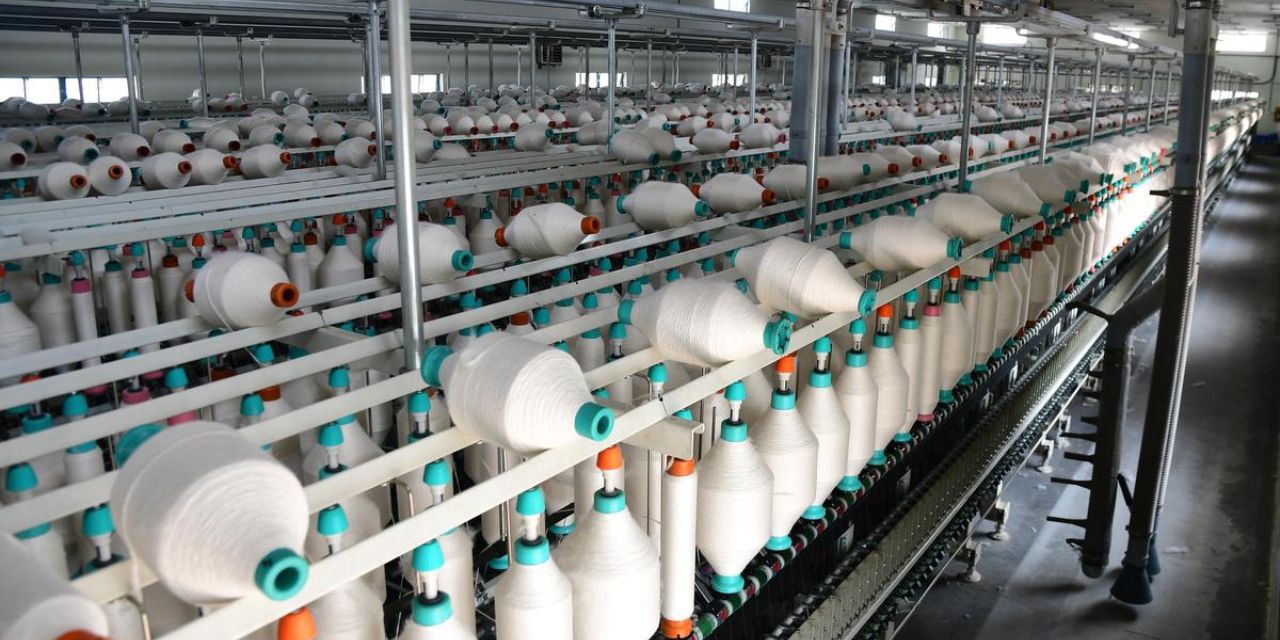
Textile mills in Tamil Nadu are increasing capital investments in modernisation and capacity expansion as demand for cotton and blended yarns shows signs of recovery.
Coimbatore, Tamil Nadu: Textile mills across Tamil Nadu are beginning to increase investments in modernisation, automation and capacity expansion after facing one of the industry's most challenging periods in recent years.
The renewed investment activity comes as demand for cotton and blended yarns has improved over the past few months, encouraging mills to upgrade machinery and strengthen production capabilities.
KPR Mills Invests ₹260 Crore in Modernisation
Among the companies stepping up investment is KPR Mills, which informed the Bombay Stock Exchange on August 10 that it is investing ₹260 crore to modernise and expand two of its spinning mills at Karumathampatti in Coimbatore district.
The company expects the upgraded facilities to become operational by the third and fourth quarters of the current financial year.
The investment reflects a broader shift among textile manufacturers towards improving productivity and competitiveness through modern machinery and upgraded production systems.
Mills Focus on Capacity and Automation
Other textile mills in the region are also looking at modernisation and capacity expansion.
The Pallana Group, based in Pallapalayam, is investing in modernisation and capacity addition at its medium-scale textile mill in the Kannampalayam area. The mill is also adding capacity by sourcing second-hand machinery.
The renewed focus on investment is being driven by the need to improve productivity and remain competitive in a market where operating costs and raw-material prices continue to fluctuate.
An industry representative noted that modernisation is increasingly important for mills seeking to improve productivity, increase automation and gain a cost advantage.
“If we do not reinvest and if there is no capital investment, we will lose out. With modernisation, the mills will get better productivity, improve on automation, and get a cost advantage.”
Export Orders Begin to Recover
The improvement in export demand is providing additional confidence to textile manufacturers.
According to the report, export orders have revived in recent months, with global demand for yarn showing signs of improvement. China has emerged as the main buyer of yarn, supporting the recovery in the market.
The development comes after a prolonged period of weak demand that placed significant pressure on spinning mills across Tamil Nadu.
Textile Industry Recovers After Prolonged Crisis
Tamil Nadu's textile industry has experienced one of its longest periods of difficulty since 2022. Several mills have either shut down operations or reduced production during the last four years.
Mills that have continued operations, particularly those that had secured cotton supplies earlier, are now benefiting from the improvement in demand.
The recent recovery is encouraging mills to reconsider capital expenditure and invest in technologies that can improve operational efficiency.
Rising Cotton Prices Remain a Concern
Despite improving market conditions, rising cotton prices remain a major concern for textile mill owners.
The domestic cotton market has been strengthening, increasing the cost burden for spinning mills. Higher raw-material costs could put pressure on profitability if yarn prices do not rise sufficiently to compensate.
Industry participants are therefore balancing the opportunity created by recovering yarn demand with the challenge of higher cotton prices.
Modernisation to Shape the Next Phase
The latest investments indicate that textile mills are moving towards a more technology-driven production model. Modern machinery, automation and capacity optimisation can help manufacturers improve efficiency while reducing production costs.
For Tamil Nadu, one of India's major textile manufacturing hubs, continued investment in modernisation could strengthen the competitiveness of its spinning sector in both domestic and international markets.
With yarn demand showing signs of recovery and export orders improving, the coming months could provide textile mills with an opportunity to rebuild capacity and invest in long-term efficiency.


No comments yet. Be the first to share your thoughts!